Skip to Content Skip to Navigation

Yardbirds.US: Press

psychedelicsight.com
Playing fast and loose, the Yardbirds rolled into L.A. with their latest crop of talented young musicians. An audience that started out waiting to be impressed...
 
At The Key Club, Hollywood (Oct 15, 2011)
www.vintagerock.com
Vintage Rock, off-beat essays, CD, DVD reviews, interviews, featured articles , Beatles, the Rolling Stones, The Who, Pink Floyd, Led Zeppelin, Deep Purple, Yes, Grateful Dead, music legends.
- Vintage Rock (Sep 30, 2011)
www.guitarworld.com
The Yardbirds are Jim McCarty (drums), Ben King (lead guitar), Chris Dreja (rhythm guitar), Andy Mitchell (lead vocals/harmonica), David Smale (bass guitar).

The editor-in-chief of Guitar World Magazine says it's one of the best gigs he's seen all year. Not to shabby! (Click on the link)

www.examiner.com
I spent a delightful Thursday afternoon chatting on Skype with legendary drummer Jim McCarty. McCarty is a gifted songwriter and a brilliant drummer...
(May 17, 2011)
The Short-But-Sweet Interview: Chris Dreja of the Yardbirds

Chris Dreja answers the tough questions


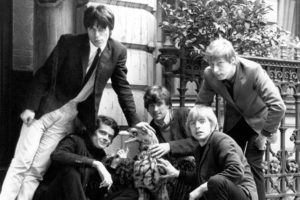
The Jimmy Page-era Yardbirds line-up (with Peter Grant dressed as Old Saint Nick) - Mr. Dreja on far left. 
Credit: Chris Dreja )

Few bands in the history of rock can say that they served as the launching pad for multiple guitarists. But that's exactly what the Yardbirds were able to accomplish during their 1960's heyday, as they saw the likes of Eric Clapton, Jeff Beck, and Jimmy Page pass through their ranks.

Original members Chris Dreja (rhythm guitar) and Jim McCarthy (drums) still perform as the Yardbirds, and continue to tour the world to this day.   

Recently, Dreja OK'd a Short-But-Sweet Interview assignment.   

UGO:  Looking back, what was your favorite Yardbirds line-up?    

CHRIS DREJA:  Beck, Relf, Samwell-Smith, McCarty and Dreja.    

UGO:  Why do you think the Jeff Beck/Jimmy Page Yardbirds line-up didn't last longer?    

CHRIS DREJA:  Ego and Jeff had a burn out. Jeff did not really enjoy his lead guitar space being invaded.   

UGO:  When you heard that Mr. Page was launching a band called "The New Yardbirds" [which became Led Zeppelin], what were your thoughts?    

CHRIS DREJA:  When the original Yardbirds burnt out there were still some contracted dates to fulfill, I had no problem for Jimmy to play those dates. Using the name beyond those shows I was not happy about, and through my lawyer I made that plain to Peter Grant. I still have the document. They quite rightly changed their name to Led Zeppelin and never looked back.    

UGO:  What are some memories of taking the classic photo of Led Zeppelin for the back cover of Led Zeppelin I?    

CHRIS DREJA:  I always got on well with Jimmy especially with photos of him, so it was nice to be approached for the photography of the very first album. It was early days for me as a studio photographer so it was a very simple shot. Apart from Jimmy who was already pretty well known, the others were charming, polite and shy and it was very interesting to me when a couple of years later when I photographed the band again, how much they had changed and grown in stature apart from John Bonham who had grown an obvious problem, and seemed oblivious to the whole session, not the innocent young man I had photographed on the album.     

UGO:  Which other bands did you photograph back in the day, and memories of each?    

CHRIS DREJA:  My early work was all reportage, Andy Warhol, Lou Reed are there somewhere and some other characters, I did an extensive session for Fleetwood Mac but I moved pretty quickly into advertising and design work.   

UGO:  Was Yardbirds/Zep manager Peter Grant really as fearsome a character as everyone makes him out to be?    

CHRIS DREJA:  If you were part of his family he was truly wonderful, if you were not, you had better really watch how you behaved.   

UGO:  What do you have to say to those who don't like the fact that the Yardbirds are still touring, but without Clapton, Beck, or Page?    

CHRIS DREJA:  I do not say anything. It's a well known fact that throughout the Yardbirds career there have been quite a few outstanding guitarists, the band is known partly for that. It is also known for its innovation and a collection of amazing songs. We play with great passion all over the world and have re-built an infinity with existing and new fans of the band.   

UGO:  What's on the horizon for the Yardbirds?    

CHRIS DREJA:  We just played in Japan and left one day before the country almost heaved to total destruction. So, personally speaking, I'm doing just one day at a time and treasuring bringing enjoyment where I can.          

 
(Apr 27, 2011)


(Rock News Desk) Original Yardbirds guitarist Top Topham says Jimmy Page asked him three times to join the band which would become Led Zeppelin.

 Topham, now 63, began playing with the influential Yardbirds at the age of 15, but left in 1963 and was replaced by Eric Clapton. Jeff Beck and Jimmy Page later played six-string for the band before it folded.  

Page went on to form the New Yardbirds in 1968, which soon became Led Zep. And Topham, a respected blues player and a painter, confirms he was invited to play second guitar with the new outfit – but said no. "I was making my Ascension Heights album when I received three telegrams, which I still have, from Jimmy and his manager Peter Grant," He tells Guitar International. "They expressed an urgency for me to get in touch with them, saying, 'Great news for you'. I called them from our local phone box – we didn't have a phone in those days – and Jimmy said he wanted to reform the band under the name the New Yardbirds, and hit America, and asked if I would be interested.

"Wait for it… I said no. I was writing and playing on my own album at that time so it seemed like the right choice." more on this story


RockNewsDesk.com is an official news provider for the Day in Rock.


(Apr 28, 2011)

The Yardbirds to Headline First Annual ZepFest

ZepFest 2011

The Yardbirds will be headlining the first annual ZepFest, playing all three nights—Memorial Day Weekend, May 27-29—at the National Harbor, on the Potomac River, at Waterfront Street and St. George Blvd., in Prince George's County, MD.

There are a variety of tickets and pricing plans available for the Fest, including one-day events and VIP get-togethers. The full Fest is $325.00 and tickets are available at MissionTix and the designated ZepFest site. For more information, please e-mail info@zepfest.com and visit ZepFest.com or ZepFest2011.com.

The ZepFest features over 50 bands on five stages with speakers, authors and secret shows. It's also a completely Green festival. ZepFest CEO and Festival Director Mark Boudreau says the Fest will include, “Descendants, disciples and influences.” Set to appear are blues artists the Night Hawks and Willie Big Eyes Smith, Vanilla Fudge, tribute bands, and guest speakers, most notably Atlantic Records' Jerry Greenberg. The late Pinetop Perkins was scheduled to perform, and the entire ZepFest will be dedicated to him.

The Yardbirds' band members will be on hand throughout the day to connect with fans. Guitarist Ben King will be part of the Ultimate Dream Band, in which a lucky fan gets a shot at playing before the Yardbirds. The band's tour manager, Henry “The Horse” Smith, an original Led Zeppelin roadie, will be on hand to tell stories. Jim McCarty will be giving a Q&A Session. Rhythm guitarist Chris Dreja, who became a professional photographer after the Yardbirds broke up in 1968, will be showing (and selling) photographs, including the iconic back lit shot of Jimmy Page, which will be signed by both Jimmy and Chris. A sampling of Chris' work can be seen on his web site.

The Yardbirds is original members Chris Dreja on rhythm guitar and drummer Jim McCarty, and a new generation of musicians: singer/acoustic guitarist/harpist Andy Mitchell (since 2009), bassist David Smale (since 2009) and lead guitarist Ben King (since 2005).

- Guitar World (Apr 8, 2011)
(Bottom review from Mojo Magazine)
Rolling Stone/Mojo (Feb 10, 2011)

Carl Wiser (Songfacts): Jim, I was reading this old NME article from 1965, and somebody asked you about what the Who were doing, and you said, "Well, the Yardbirds and the Who are the only groups doing anything new right now." What were you doing that was new?

Jim McCarty: Right. Back in '65, we were experimenting with our sound. Experimenting in sounds and experimenting with different rhythms, changing rhythms within songs. We started playing like the Who, as well. We started playing R&B songs that we had coming from the States: Howling Wolf, Jimmy Reed, Bo Diddley and stuff. We were very keen on that sort of music, because it was something very fresh to us, and very exciting. It had all the elements of rock and roll music, and something else on top, some sort of raw emotion to it, so we started playing that. And then we wanted to put our own identity into it, so we all put our ideas into the pot and we came up with things like those big buildups we did, which became known as the Rave Up, sort of all coming up to a big crescendo and then coming down again very quietly and changing the tempos within the songs, and also using mad effects on the guitar, which Jeff was very good at, Jeff Beck. We were really trying to find an original sound and having fun doing it, as well.

Songfacts: Were you ever consciously trying to create a hit song?

Jim: It was very difficult, actually. (laughing) That's probably the hardest thing to try and do. Every time we tried to do that it never really succeeded. I suppose we were lucky in that when we did "Shapes of Things" it was like a hit song, but we were really coming from not trying to create a sort of a 3-minute piece of music, it was just something that seemed natural to us. We started with the rhythm, we used a bass riff that came from a jazz record, got a groove going with that and then added a few other bits from elsewhere, other ideas that we'd had. And I think it was a great success for us, it was a good hit record that wasn't really selling out. And it was original.

Songfacts: Where did the lyrics come from to the Yardbirds songs that you wrote?

Jim: Well, the "Shapes of Things" was very much about the state of the situation in the country with the Vietnam War, so it was sort of an anti-war song. "Over, Under, Sideways, Down" was more about the situation of having a good time - a bit of decadence, really - in the '60s. Cars and girls are easy to come by in this day and age, and laughing, drinking, smoking, whatever, till I've spent my wages, having fun. "Still I'm Sad," Paul (Samwell-Smith) really came up with those lyrics. It was very reflective, quite sensitive about losing it, losing a girlfriend or whatever, and about things he saw in nature. We had all sorts of ideas, and then obviously there's the typical blues lyric. I think the lyrics were something we were quite interested in doing. But they ranged from all sorts of things. Keith and Paul were particularly good at those.

Songfacts: Was it a group effort?

Jim: Yeah, it would have been a group effort. On "Over, Under, Sideways, Down" I think we all put in our bit. I put in a tune, somebody else said, "How about the state of things at the moment, it's all over the place, so it's sort of over, under, Sideways, down." On "Happenings Ten Years Time Ago," Keith and I were trying to write a song about reincarnation. We'd seen everything before, and it was all happening again. That was quite an interesting viewpoint, really. Meeting people along our way that we'd seen from another day. I can't remember exactly the lyric, but sort of bringing in that situation that we'd been there before. "For Your Love," that was written by someone else. (laughs) But we liked to explore lyrics.

Songfacts: Would the lyrics come first, or would the music come first?

Jim: The music always came first. Yeah, the best thing was getting the groove first. The groove, the riff of the song, and then the lyrics came on top of that. And then the tune maybe, as well, that would come before the lyrics. But the tune would usually come over the groove. But we had a good combination of people, with Paul and Keith, Jeff, Chris and me, and that lineup. We all contributed and worked very well together. We seemed to work well as a unit to make up stuff. And, in fact, Roger (Cameron), the engineer of the album, we did one of our first albums, it was originally called The Yardbirds, and we recorded that in about a week in the studio. And a lot of it was written at the time, so we sort of made it up as we went along, and it was great fun. And at the time the albums didn't sell too much; albums were looked upon as just a group's wasting a bit of time in the studio. But now it seems to be taken as a classic album.

Songfacts: Tell me about how the grooves come together. I'm trying to get a sense for if you would start it off, or if you would start with a guitar lick, or just how these musical tracks came together.

Jim: Yeah. It's a good question. With "The Shapes of Things" I came up with a marching type of rhythm that I tried to make interesting. And at the end of each line we'd build up like we used to do with some of our stage stuff - the rave ups. And then the bass riff came on top of that. And the bass riff was loosely based on a Dave Brubeck song, sort of a jazz song, around a doo doo doo doo doo doo, and then the chords came over that. The chords were very basic, came between the two tones, I think G and F, and then resolving it in D, each verse. And then the tune came on top of that. In fact, I remember putting the backing track down, which sounded great. I wasn't at the session where Keith made up the tune, and when I heard the tune, I thought, Oh, that's great. It's a real surprise. He made up the tune, and then we had this sort of "Come tomorrow," but that was part of the song, anyway, at the beginning. So it was an exciting song to be involved in.

Songfacts: A lot happened in your five years with the Yardbirds. At the time, were you enjoying yourself?

Jim: It's very much up and down. Yeah, it was very much like a microcosm of a life, really. Very extreme, because we'd go from being on top of the charts and going to fantastic places and traveling to places like California that were just our dream after being in a sort of post-war London, which was rather dismal and rather miserable. Suddenly we were going to sunny California where things were happening and things were rich and there were lovely girls and cars and everything. From that to sitting all night in a bus driving to a gig and not being able to stop and feeling absolutely wretched from being so tired. And getting on each other's nerves and arguing. (laughing) So it's very much the extreme life.

Songfacts: It sounds like you guys learned a tremendous amount working together. And it's interesting following your solo career and how you're not just a drummer; you do write the lyrics, you do have an overall knowledge of music. Did that come from your work in the Yardbirds?

Jim: Well, it must have helped a lot, yeah. I've always been interested in lots of different musical ideas and I've had tunes going through my head, and it did help me to express those. So to contribute those to the songs and gain some confidence that I could do it was important. And after the Yardbirds split up I taught myself the chords, because at the time I couldn't really play any other instruments. So I taught myself how to play chords on the piano and guitar. And then I could have a lot more fun because I could write songs with the chords as well. But I relied very much on Paul and Keith, really, to work in those days, to write songs. But yeah, it must have helped me an incredible amount.

Songfacts: How did you guys feel about the Graham Gouldman songs? (Gouldman, who later formed 10cc, wrote the Yardbirds hits "For Your Love," "Evil Hearted You" and "Heart Full of Soul.")

Jim: Well, they were always very original. Very interesting songs, very moody, because they were usually in a minor key, the ones we did, anyway. "For Your Love" was an interesting song, it had an interesting chord sequence, very moody, very powerful. And the fact that it stopped in the middle and went into a different time signature, we liked that, that was interesting. Quite different, really, from all the bluesy stuff that we'd been playing up till then. But somehow we liked it. It was original and different. "Heart Full of Soul" also, very moody, gave us the ability to play the riff in sort of an Eastern way, give it an Oriental touch. Another very good song. Same with "Evil Hearted You," they were all very moody but very good songs. And of course the stuff he did with the Hollies also were very good. "Bus Stop" and "Look Through Any Window," great songs.

Songfacts: And you guys had no problem recording the work of another songwriter?

Jim: No. No, really. To try and get a hit song in those days was quite a difficult thing to do for us. We could come up with ideas, but our first hit song was very important for us. And with "For Your Love" we heard it and had the demo of it and it sounded like a hit song to all of us. Yeah, there wasn't a problem doing that. It was the sort of thing that you relied on to get into that other echelon, to have a hit song. All our contemporaries were having hit songs: The Beatles and the Stones and the Moody Blues and Animals, they were all having Number 1 hits and we were really trying to keep up.

Songfacts: That's interesting. I can see how at the time it must have been frustrating not having a hit. Because you would have no idea how validated you guys would become - being so revered and in the Rock and Roll Hall of Fame.

Jim: Yeah, exactly. Exactly. But it was quite an art, because everything we recorded, all the stuff that we played live and we recorded in the studio, it just sounded really tame. The studios weren't so good then, they weren't really geared for playing rock and roll or blues music. And all the ideas that we'd had up to "For Your Love" just sounded awful. And so "For Your Love" was the song that would sound good anyway, because it was a much more commercial song.

Songfacts: Based on that answer, it sounds like a problem was the production, or was it the fact that when they put you guys in a studio, you just couldn't play like you could when you were on stage?

Jim: It's a sort of funny combination, really. If we went in the studio today, if we went in the right studio and played some of our live stuff now, it would sound exciting. But in those days it was difficult to produce that excitement. And it was only on our live album, live at the Marquis, 5 Live Yardbirds, that we achieved some excitement out of playing live. We had some sort of magic that was missing playing in a very cold studio room.

Songfacts: And Jimmy Page then went on to be a very successful producer. He was able to take that live sound for Led Zeppelin and put it on the records.

Jim: Well, I think studios had improved by then, and some of the English engineers he worked with, people like Andy Johns, who was a great engineer, Glyn Johns and Andy Johns, they were some of the first engineers that were very good. And they managed to get that rock and roll sound. I think Led Zeppelin were one of the first groups in those days, like late '60s, early '70s, where they really achieved that sound for that sort of music, for that really heavy rock music. Up till then, you couldn't really turn the guitar up, or turn the guitar down too much, for the studio.

Songfacts: Which of the Yardbirds guitarists were your favorite to work with?

Jim: Well, they were all very good. I liked them in different ways. I think Jeff was very good to work with in that he was a very spontaneous, very wild player; very creative, and he would never play anything twice. So I enjoyed it playing from that point of view. But of course he was very - well, how can I say - you never really quite knew what was going to happen with him. So he could go into a mood at a gig and lose his temper. So although he was spontaneous, you never really knew. But Jimmy Page in those days was much more grounded. And much more business-like. I know people laugh when I say that. And he was good to work with, because you more or less knew how a gig was going to be. But maybe he wasn't quite as creative and spontaneous as Jeff.

Songfacts: What about Clapton?

Jim: Eric - yeah, Eric was very good. He played some great stuff. Very pure guitar player, very purist, very blues oriented guitar, great timing. But he also was quite difficult to work with in that he'd be quite moody and he was really destined, like Jeff, to be his own guy, to be a solo player. And he had trouble working with a band, in a band situation. So he'd often be very moody and very stand-offish with the rest of us.

Jim's 2009 album Sitting On Top of Time is more in the style of Renaissance: easy on the drums with a prominent flute by Ron Korb. Musicians on the album include George Koller, Steve Hackett and Jean-Michel Kajdan.


Songfacts: I thought it was interesting when you were talking about how quickly you were recording some of these Yardbirds songs, and then when I look at your Sitting On The Top of Time album, you recorded that over the course of years.

Jim: (laughing) Yeah, that's only because I was in and out of the studio. It was quite quick, really, because I just did it in slots. So it was more of an add-on after a tour. So I'd do a tour in America, and then go back to Toronto for a couple of weeks and record a few sessions. And then wait for the next tour and do the same. So overall it wasn't really that long a time in the studio.

Songfacts: All right. So it wasn't like you were agonizing over every note.

Jim: (laughing) No, no. And I'd go back home and write some more songs or change songs around and come back again and do a different arrangement. It was quite a nice way to work.

Songfacts: What's one of the songs that you're really proud of off of this album?

Jim: Well, let's see, I think "Living From The Inside Out," I'm proud of that, I think that worked out very well. "Hummingbird" worked well. "Sitting On The Top of Time," those three I'm quite proud of.

Songfacts: Describe to me lyrically what's going on in the album as a whole, and in some of the songs.

Jim: Lyrically it's about very much being in the present moment. "Living From the Inside Out" is about coming from the inside, how you live your life, rather than letting everything else affect you. Capturing a strength inside and living from that, as opposed to relying on everything else for your life. "Sitting On Top of Time" is about just living in the present moment. I always felt somehow that everything I did was about being in front of time. In fact, I was maybe having ideas that were too advanced for people to understand, and then I suddenly had this thought that suddenly I was sitting on top of time, so I would say right on the time. Difficult to explain it. But it's about living in the present moment, everything coming from that state of mind.

Songfacts: I'm getting the sense that you're a rather spiritual person?

Jim: Yeah, I suppose I am. I've followed various philosophies during my life. I've gone through spiritual healing and also I've studied Buddhism - I've been a follower of Buddhism for a while. So I've been through quite a few different spiritual journeys as part of my own journey. And yeah, I would say I'm quite a spiritual person.

Jim McCarty's website is jimmccarty.co.uk.
Carl Wiser - Songfacts (Dec 23, 2010)

Lenny Helsing - Shindig Magazine (Aug 3, 2010)

The Yardbirds, one of the ’60s most influential classic rock bands, played an electric and exhilarating set at B.B. Kings on Wednesday May 26, with opening act The Doughboys on the bill. The current lineup of the Yardbirds includes founding members Chris Dreja (guitar) and Jim McCarty (drums) along with Andy Mitchell (vocals, harmonica and bongos), Ben King (lead guitar) and David Smale (bass). While remaining true to their original sound, the band sounded fresh and had tremendous energy, giving longtime fans and others in attendance a blues based, psychedelic tapestry of good time rock and roll.

The Doughboys,a group which started in 1964 and was the house band at New York rock and roll landmark Café Wha in 1968, were a great choice to open up for the headliners. Their hard-driving, infectious ‘60’s style sound featured singer Myke Scavone’s top notch vocals, Gar Francis’ scintillating guitar work and Richie Heyman’s expert percussion. With great originals like “I’m Not Your Man” and “Twelve Bars and I Still Have the Blues” combined with a unique interpretations of the Moody Blues “Tuesday Afternoon” and The Rolling Stones, “Paint It Black” these rock and roll veterans showed the crowd why Little Steven, host of Q104.3’s Underground Garage radio show, is a big fan.

Hailed by rock historians as a groundbreaking prototype for improvisational bands that followed like Cream and Led Zeppelin, the Yardbirds are a guitar driven band which explored blues, psychedelic music, and Raga featuring brilliant solo passages (“Rave- Ups”) with the help of Eric Clapton (1963-1965) Jeff Beck (June 1966 to November 1966) and Jimmy Page (1966-1968). They have continued this tradition today with their new guitar ace, Ben King. Keith Relf, their original singer, who had gone on to form the original version of the band Renaissance with McCarty after The Yardbirds split, was accidentally electrocuted in 1976, while original bassist Paul Samuel Smith went on to produce recordings by Cat Stevens. Not content to rest on their laurels, the band recorded “Birdland” in 2003 and “Live at B.B. Kings Blues Club” in 2007.

On this night, the Yardbirds quickly showed why they are a rock and roll treasure with their opening song “Train Kept a Rollin,” a “nugget” written by Tiny Bradshaw in 1951, but a song the band has made it’s own. From its opening locomotive guitar sound by King, to its hard-driving rhythm, the performance hit the mark. The song, also covered by Aerosmith on their “Get Your Wings” release, has never sounded better. Another highlight of the early part of the show was “Drinking Muddy Water,” a Yardbirds original, which got the crowd into a blues mood with brilliant harmonica work and strong Muddy Water inspired vocals by Andy Mitchell. Mitchell, who is relative newcomer to the group (2009), shone brightly on this homage to blues greats. The band kicked it into gear with “The Nazz are Blue,” a song originally sung and played by Jeff Beck with the band, which displayed King’s phenomenal dexterity on the guitar and his feel for Beck inspired lead breaks. King has seamlessly fit into the band’s guitar spot which is not an easy task due to the god-like icons who occupied that role at different times in the band’s history.

Next up was one of the Yardbirds songs that have a strong social message, “You’re a Better Man Than I,” with great fuzz tone employed by King. “Mystery of Being,” a tune from the aforementioned “Birdland” that sounds like a classic Yardbirds song from the sixties, was well received by the audience. “Shapes of Things,” a 1966 single of the band, followed with Mitchell’s strong self-assured vocals and King’ brilliant middle section guitar “excursion.” “Crying Out for Love,” another track from their 2003 release showed why this band isn’t an oldies act, but fresh and relevant.

“Rack My Mind,” another Beck era masterpiece, was given stellar treatment with King’s intricate guitar work and musical call and response with Mitchell’s harmonica styling. Dreja, whose rhythm playing was solid throughout, was beaming from ear to ear while watching this version of his legendary band at work. McCarty’s drumming was rock solid and true to the original style he employed in the formative years of his career.

The show was cooking at this point with band upping the ante a little bit with “Over Under Sideways Down,” whose opening refrain is a classic rock guitarist’s rite of passage. Soon after, Chester Burnett’s “Smokestack Lightning” helped transform B.B. Kings into a blues joint with it’s infectious rhythm and wonderful solo showcases for King and Mitchell on Fender Telecaster and harp respectively. Smale’s intricate melodic bass line on this song and his playing on all others during the night was first-rate.

An amazing change of pace followed with “Still I’m Sad”, which features a Gregorian chant and atmospheric musical accompaniment. This is an example of the tremendous breadth of the Yardbird’s musical catalogue and the versatility of the band. A track from the quartet version of the Yardbirds that featured Jimmy Page, “Little Games” was delivered magnificently by Mitchell and as the band left the stage, you knew the crowd would be calling them back for more.

Dreja expressed how much he loves playing in New York City and remembers his years residing there fondly. There also was a touching moment when he introduced the other original Yardbird, McCarty, telling the audience what a great musician and person he is and how they have a dear friendship.

A three-song encore followed and was the high point of a brilliant show. First up was “For Your Love” the band’s 1965 hit single that features a harpsichord and bongos on the recorded version.This also was the song that hastened Eric Clapton’s departure from the band because he thought they were becoming too commercial. He was, and still is, a blues purist. Excellent harmonies and Mitchell’s inspired vocals and bongo playing helped make this version, on this night, dynamic. “Happenings Ten Years Time Ago,” one of two recorded tracks featuring Page and Beck with the Yardbirds, was a rare treat and its late “’60s vibe and unique time signature transported this crowd to the days of lava lamps and free love.

“Dazed and Confused,” a Led Zeppelin staple that Jimmy Page played with the Yardbirds on their last two American tours and later recorded for Zeppelin’s debut release, was preformed expertly with the band cooking on all cylinders. Kings’ guitar work was inspiring and evocative, catching the spirit of the original feel of the song, but taking it to greater heights.

This was truly a great night for rock and roll. The Doughboys,an under-appreciated rock outfit, wowed the crowd with a stellar set and 1992 Rock and Roll Hall of Fame inductees The Yardbirds showed why they are an iconic band with a musically proficient performance that gave a nod to the past, but had a “now” attitude. Dreja and McCarty have aged like fine wine and King, Mitchell and Smale’s musicianship has given this legendary band a look into the future. They are part of rock and roll history, but wrote a new chapter on this night. Dreja told me B.B. Kings reminds him of his days playing the Marquee Club on 165 Oxford Street in London in the “Swinging Sixties.” Things have come full circle and the crowd at the club this night was treated to a “Rave- Up,” 2010 style.

Steve Janowsky - www.reviewfix.com (Jul 28, 2010)

Chris DrejaThe Yardbirds were doing a show with the Beatles in the mid-'60s when Paul McCartney arrived in their dressing room with a backstage surprise.

"Paul came in with an acoustic guitar and said, 'Hey, lads -- what do you think of this?'" says Chris Dreja, the Yardbirds's bass player at the time. "And he started to play a song called 'Scrambled Eggs.'"

Later, McCartney and producer George Martin would score orchestral parts to the song, a melodic ballad about a man reflecting on his younger years. "Of course, it would become 'Yesterday,'" Dreja says.

While the Yardbirds weren't around long, they made enough of an impression on the Beatles, who invited them to perform a series of shows with them in December of 1964 and January of 1965. "They dug what we were doing," Dreja remembers.

While the Yardbirds were relatively unknown, at the time, the Beatles were already a sensation. so the Yardbirds knew opening for the Liverpool band was a big break. "You couldn't go a day without hearing or seeing something in the press about the Beatles," Dreja says.

While the Yardbirds would eventually become known for having three of the greatest rock guitarists -- Eric Clapton, Jeff Beck and Jimmy Page -- in the band at one time or another, at the time Clapton was their lone lead guitarist, with Dreja playing rhythm guitar. When the Yardbirds toured with the Beatles that winter, Clapton found a lifelong friend -- George Harrison.

A few years later, Clapton would record a guitar solo for the Harrison-penned 'While My Guitar Gently Weeps.' While that solo is a legendary rock piece, when the Yardbirds opened for the Beatles, Dreja says, Clapton was a blues purist -- one who would dislike the Yardbirds hit 'For Your Love' because it wasn't bluesy enough.

"Eric is a chameleon, both as a character in many ways and as a musician," Dreja says, noting that Clapton would often change his look and musical styles through the years that followed.

Of course, the Beatles famously changed their sound through the years, and during that winter tour, Clapton and Dreja were able to witness the fruits of the Beatles' success. Between performances at the Hamersmith Odeon, Dreja remembers, the Beatles had a local car company drive a small fleet of Rolls Royces to the venue for the Fab Four's inspection.

"They had this line of Rolls Royces to choose from," says Dreja, who reunited with a reformed Yardbirds in the '90s, "and they were test driving them in the lot behind the stage." The Rolls that John Lennon chose -- and later had painted with a psychedelic design -- sold for $2.3 million in 1985.

While Dreja was one of the select few to hear 'Yesterday' in those early stages, it wasn't the only rock 'n' roll classic he'd get a sneak preview of. "I got to hear 'Stairway to Heaven' before it was released as a single -- with a few mistakes in it," he says.

What rock fan wouldn't want to be in those shoes

- Spinner Music (Jul 6, 2010)

Yardbird Chris Dreja talks about Led Zeppelin:

Chris Dreja was in one of the most legendary bands of all time – Rock and Roll Hall of Famers The Yardbirds. But when the band broke up in 1968, he traded his rock and roll lifestyle for a job as a photographer.

“I got fed up with how my life was being controlled by often half a dozen people who were out of order,” Dreja told Spinner. “I wanted control of my own destiny.”

The Yardbirds bassist was already interested in photography when he was a member of the band, but he made it his full-time passion when singer Keith Relf and drummer Jim McCarty wanted to do more acoustic-based music and Jimmy Page wanted to continue with hard rock, soon forming Led Zeppelin. Because of his friendship with Page, Dreja shot the band photo on the back cover of the group’s debut album.

“They paid me $15,” he said. “I thought Page had a pretty good chance of putting a good band together. Of course, I didn’t know how good they were going to be.”

There were rumors that Dreja was originally going to be the bassist in Zeppelin, but he says that never happened.

“I was never asked,” he says. “John Paul Jones was the best bass player in Europe at that point. He was a perfect match.”

In later years, Dreja became a professional musician again. He recently completed a tour with the current version of The Yardbirds, which also includes original drummer McCarty.

- Spinner Music (Jun 29, 2010)

Eric who? A different but true-to-its-roots Yardbirds coming to Akron

By Michael Sangiacomo, The Plain Dealer

May 20, 2010, 11:14PM

Yardbirds-2010.jpgThe Yardbirds perform Sunday night at Tangiers in Akron.PREVIEW

The Yardbirds


Where:
Tangiers, 523 West Market St., Akron.

When: 7:30 p.m. Sunday.

Tickets: $35-$40 by phone at 330-376-7171.

Don't expect to see Yardbirds alums Eric Clapton, Jimmy Page or Jeff Beck onstage at Tangiers on Sunday night, but the 21st-century version of the legendary blues-rock powerhouse band is more than just a nostalgia act. As founding members of the band, drummer Jim McCarty and rhythm guitarist Chris Dreja have earned the right to tour as the Yardbirds.

Even without the famous former members, McCarty said old fans will not be disappointed.

"The Yardbirds has such a rich repertoire of music to choose from," said McCarty in a telephone interview from England. "We do a little of everything. We do old ones like 'Smokestack Lightning,' 'Heartful Of Soul' and 'For Your Love.' We'll also do songs from our 'Birdland' album like 'Mystery of Being'."

In the 1960s, the Yardbirds were right up there with the Rolling Stones as one of rock's bad boy bands. The band was rooted in American rhythm and blues, but is best known for its amazing succession of guitarists.

"We formed out of two local bands," he said. "Our guitarist had to quit because his mother wanted him to concentrate on art school, we knew Eric, so we gave him an audition.** I took an instant dislike to him**, he was so cocky. He really liked himself. We were playing 12-bar blues songs and Eric just came in and did his thing. He was good, but rather flashy."

McCarty said he and Clapton grew to be friends over the years, but soon Clapton went off to seek his fortune with Cream, Blind Faith and so on. He was replaced by another guitarist, Jeff Beck. Meanwhile, Jimmy Page, who would later go on to form Led Zeppelin, desperately wanted to join the band.

"We wanted him to join earlier, but it didn't work out," McCarty said. "Then when he wanted to join, we already had Jeff. So Jimmy came on and played bass, which we all knew was rather stupid."

McCarty said they soon figured out where Page belonged. For a memorable period of time, the band had two lead guitarists. But it didn't always work out.

He said sometimes Beck and Page were incredible together, playing like they had the devil on their tails. But other times, because of personal jealousy, they just hurt each other onstage and the sound was awful.

They didn't have to worry about their excess of riches for too long because Beck walked out suddenly just before the start of a massive U.S. tour in 1966.

"Jeff got ill, he was always very nervous and wound up," McCarty said. "We were about to start this grueling Dick Clark tour and Jeff got stressed out. He smashed his guitar in the dressing room and said he wouldn't go on. He went to see some doctor in California because he thought he was having a nervous breakdown."

The band went on without Beck, with Page filling in nicely.

"Then, months later, Jeff walked in and said he was ready to come back," McCarty said. "We looked at each other and said it had worked better without him and that he was fired. It was a very Spinal Tap-like scene. He's never forgiven us."

The Yardbirds disbanded in 1968. McCarty and Keith Relf went on to form Renaissance while Page and John Paul Jones were joined by Robert Plant and John Bonham and formed The New Yardbirds, who, after a few concerts changed their name to Led Zeppelin.

Dreja became a successful photographer and McCarty bopped around in several new bands.

"Chris and I stayed in touch. After the Yardbirds were inducted into the Rock and Roll Hall of Fame in 1992, people kept asking us about re-forming," McCarty said. "Then an agent called and asked us if we fancied going back on the road. We talked it over and have been the Yardbirds again ever since."

McCarty said "the road" is so much nicer today than in the 1960s.

"We relied on gigs for our livelihood," he said. "Today it's more relaxed. The sound is much better, the clubs are better. It's a whole new world."

To reach this Plain Dealer reporter: msangiacomo@plaind.com, 216-999-4890

Cleveland Plain Dealer (May 18, 2010)
Roch Parisien's Rocon Communications THE FACEBOOK INTERVIEW WITH ROCH AND JIM MCCARTY OF THE YARDBIRDS HAPPENS.
Great interview with McCarty done live on Facebook. Check it out.
Roch - Facebook (May 11, 2010)

Album review: Jeff Beck, 'Emotion & Commotion'

3 stars (out of 4)

As one of the guitarists who defined British blues-rock in the ‘60s, Jeff Beck has ventured farther afield in subsequent decades than any of his contemporaries (Eric Clapton, Jimmy Page, Peter Green). He has explored everything from jazz-fusion to rockabilly, Tin Pan Alley standards to techno. What’s more, he releases albums at a leisurely pace, as though utterly unconcerned with the whims of the marketplace or the needs of the music industry. In that time, he has become one of the most distinctive, virtuoso voices ever heard on electric guitar.

And “voice” is the operative word on his first studio album in seven years, “Emotion & Commotion” (ATCO). Though there are a few moments of shredding violence (the dated-sounding riff-rocker “Hammerhead,” the explosive fills on “There’s No Other Me”), Beck mostly focuses on coaxing a languid, liquid, singing expressiveness from his instrument.

New Age Beck? It’s something like that. In emulating great vocalists he has admired, from Jeff Buckley to Judy Garland, the guitarist conjures a serene lyricism. Female vocalists drawn from the worlds of opera (Olivia Safe), swing (Imelda May) and soul (Joss Stone) provide window-dressing, and the symphony orchestra accompaniment is gratuitous. This is mostly a study in melody and melancholy, with Beck’s plaintive tone at its best on the complicated romanticism of “Lilac Wine,” the hymn-like “Corpus Christi Carol” and the sighing “Elegy for Dunkirk.” On these tracks, the guitarist articulates and then savors each note as if it were his last.

greg@gregkot.com

From The N.Y. Daily News:

Guitar dreams don't get more dramatic than this.

Eric Clapton and Jeff Beck -- two of the holy trinity of living axe-men -- performed their first-ever full American concert together at Madison Square Garden Thursday night.

(For the record, the third guitar deity is Jimmy Page.)

All three played in the seminal British blues band the Yardbirds back in the '60s, with Beck having replaced Clapton in '65.

In the years since, Beck has wavered through an erratic career, ducking in and out of the limelight, while Clapton has barely left it for a second.

Their divergent careers may account for some of the difference in attitude and effort displayed by the two legends last night.

Beck, who opened with a 45-minute solo set, played as if he still had something to prove, reeling off solos informed by equal parts technical derring-do and emotional resonance.

Clapton more often held back in his set, letting the songs rule while doling out his runs with dutiful care. Only in the concert's final third did the two stars cross axes at last.

Beck's opening mirrored his changeable career, careening from funky blues to fusion jazz to grand balladry.

In Jeff Buckley's "Corpus Christi," he infused his guitar with all the hurt and variety of a human voice.

His instrumental version of the Beatles "A Day In The Life" recreated the song's entire panoply aided by an orchestral backup.

Even a reach into opera -- a run at "Nossom Dorma" -- sounded both edgy and ravishing.

Clapton's set proved far drowsier, opening with four acoustic shuffles.

Although his solos were immaculate and scholarly, they were also distanced, weighed down further by the star's indifferent backing band.

Unfortunately, Clapton's group backed the tandem section, rather than Beck's more feverish players.

The two stars found common ground in the blues but largely kept out of each other's way, rarely goosing each other and therefore establishing only a polite rapport.

Nowhere did Clapton show the intimacy and emotion he enjoyed in his brilliant Garden show with Steve Winwood last year.

Beck put more muscle in his playing, as well more wit, especially in "Shake Your Money Maker" and a lovely take on "Moon River."

Moments like that gave the show value. But as far as fulfilling a generation's life-long fantasy, let's just say it lived better in our minds.

jfarber@nydailynews.com

Yardbirds drummer Jim McCarty is hoping his old job is still open.

Talking to Classic Rock, the man who also co-founded folk rock heroes Renaissance with late Yardbirds singer Keith Relf, said:

“When The Yardbirds started in 1962, we only expected it to last a year or so. At the time I worked in an insurance office, and asked my boss if he’d keep the job open for me. I must find out if he kept his word!”

The Yardbirds will celebrate their 50th anniversary in 2012 – clearly a much more major important occasion than the Olympic Games. McCarty hopes the band will mark the occasion in a suitable fashion.

“It would be great to have a special event, and get all the living former members involved – especially those three guitarists [Eric Clapton, Jeff Beck and Jimmy Page]. But who knows whether they’ll be interested.”

McCarty has just released a solo album called Sitting On The Top Of Time, and hopes to do some low key gigs to promote it.

“That depends on The Yardbirds’ touring schedule. We are still active – in fact, the average age of the band has come down now to about 30. Apart from Chris [Dreja, rhythm guitar] and myself everyone else is really young in this band now.”

The next Yardbirds show is on November 30 at Charlotte Street Blues in Central London.

- Classic Rock Magazine (Oct 22, 2009)

Jeff Beck keeps his tunes tight at MGM Grand show By THOMAS KINTNER | Special to the Hartford Courant

Although the road he has taken since his 18-month stint with the Yardbirds in the mid-1960s has not always been the most mainstream of paths, Jeff Beck has consistently ranked as one of rock music's most influential electric guitarists. His show Saturday night at the MGM Grand Theater at Foxwoods Casino in Mashantucket was a showcase for his still-stunning chops, an array of rock and blues instrumentals that were like high mass for those who worship his instrument of choice. A virtuoso without being a showoff, Beck filled his tunes with substantial pyrotechnics that never turned into mere shredding, using his thumb to pluck out decorative licks across the face of the shifty opener "Beck's Bolero." Dressed entirely in white from boots to vest, Beck rarely wasted a note, powering the blues-leaning "The Pump" with a meticulous combination of sheen and technique. With a method that favors the exact over the exploratory, the 64-year-old Englishman kept his tunes tight, always complemented by a three-piece band that knew his every move. Tal Wilkenfeld played a flexible bass throughout the program, including a jazz-tinged counterpoint to Beck's soulful flow as he worked the vibrato bar of his signature model Stratocaster in a simmering rendition of Stevie Wonder's "'Cause We've Ended as Lovers." Jason Rebello kept several tunes in balance with his nimble keyboard work, and filled out "Angel (Footsteps)" as Beck etched high-tone filigree across the deliberate ballad's face. Beck was as sharp in igniting tunes as he was in maintaining a crisp handle on their details, particularly when he ladled sizzle atop the mesh of Wilkenfeld's chunky bass and Vinnie Colaiuta's stout drumming in "Led Boots." With a lone microphone off to the side of the stage that Beck didn't go near until it was time to say goodnight, there were no vocals in the performance, as Beck did all his talking with his fingers. He joined Wilkenfeld on her bass as the pair split its neck to perform a tune together in memorable fashion, and was tack-sharp when he reclaimed his guitar to work out a tasteful, fluid take on the Beatles' "A Day in the Life." More prone to refinement than bombast, Beck closed his set in typically even-keeled fashion and remained much the same for an encore that included some juicy but always controlled rock. He closed with a bit of the unexpected in the "Peter Gunn Theme," which shared with most of his offerings that it was as appealing for its sharp craftsmanship as for the natural energy of its throbbing chug.

The Hartford Courant (Apr 13, 2009)

From the 'Let It Rock' website:

FROM THE 'BIRDS AND BEASTS There's a new band been bubbling for some time with three Brit rock veterans having a ball. These are THE YARDBIRDS' heavy hitter Jim McCarty, his RENAISSANCE cohort John Hawken, more famous for his work with THE NASHVILLE TEENS and recently THE STRABWS, on keyboards and THE ANIMALS' guitarist Hilton Valentine. They already recorded five songs to be out soon, including Jim's "It All Comes Around" which will be the B-side for the combo's first single, Graham Gouldman's "You Stole My Love". Feels teasin'!

(Mar 28, 2009)
Jane's Renaissance-Jane Relf

(08 November 2008) With all due respect to the band's most well known and prolific vocalist, Annie Haslam, who set the standard for all that were to follow, Jane Relf was actually the first woman of the British progressive band Renaissance. The inexperienced sister of the band's founder Keith Relf was called from Cornwall to sing with the all male band in London. She grew to become an astute and well established professional although the initial Mark I version of the band fell apart.

Jane continued to sing with Illusion, a progressive band built from the ashes of the original Renaissance, who released Out Of The Mist, Illusion, additional singles and finally the long lost recordings on Enchanted Caress. She recorded singles, sang for commercials and provided backing vocals to other projects, including Stairway, by the original Renaissance band members after her brother's untimely death.

Jane Relf Appreciation Society president Brian Williams has lovingly assembled an absolutely-packed, two-CD, 33-track compilation of her recordings, including the best possible production of a number of extremely rare tracks, demos and material from vinyl first time transcribed to compact disc. Entitled Jane's Renaissance 1969-1995 (Renaissance Records (USA) RMED 384, 2008). The album also chronicles origins of "Carpet Of The Sun" with two demo versions revealed first time in this compilation.

The first disc in the collection takes the listener through the very earliest days of Renaissance beginning with "Wanderer," "Island" and "Roads To Freedom." Songs are taken from the 'Mark I' Renaissance albums Renaissance (1969) and Illusion (1971). Three medleys, arranged by Brian Williams, bring further rarities to light. The disc includes tracks by Renaissance, Illusion and Jane Relf's solo work.

For many this first disc will be the first time that Jane Relf's solo tracks have been heard. These include the well arranged and accessible numbers "Gone Fishing," "My My Time Pass By," the medley of "There'll Be No Going Back" and "Carpet of the Sun," and "Without a Song For You." The medley that closes the disc is comprices exerpts from "Golden Thread," "Madonna Blue," "Isadora," "The Revolutionary," and "Candles are Burning."

The second disc begins with many of Jane's backing vocal or vocalise contributions to Louis Cennamo's Stairway album. It then continues to explore her work with Illusion. The final track is a denoised and unedited version of the "Carpet Of The Sun" demo that Jane sang. The six Stairway songs are in an early new age style and therefore contrast the balance of the material distinctly.

Inclusion of the second batch of Illusion material alongside early Renaissance in this collection clearly demonstrates how Illusion moved on from the Mark I and the Mark II band and also continues to demonstrate Jane Relf's vocal prowess. Illusion clearly made music more in line with the Britich sounds of the day. Rock songs, torch ballads and traditional pieces all work together on the disc and have been sequenced to demonstrate the producers' dedication to Jane Relf's work. Listeners will again learn to appreciate the occasional very close similarity of Illusion to Renaissance in the song "Face of Yesterday" (1977) and "Wings Across The Sea."

The compact discs are accompanied by a photo filled booklet and very thorough Jane Relf biography. While the artist has no official website or MySpace, there is a discussion group for appreciation society members. Click on the album cover above for further information. Jane's Renaissance is indeed a fanstastic two CD collection that commemorates the fine vocal work of the stunning Jane Relf. With a wide vocal range, excellent power, crystalline tone and demonstrated ability to sing pop, rock, progressive and new age, she has had an incredible career.
Russell Elliott - (Nov 14, 2008)

Jeff Beck speaks about his induction for the 2nd time into The Rock and Roll Hall of Fame: Twenty-one years ago Jeff Beck was involuntary dragged onstage at the Rock and Roll Hall of Fame to play “Satisfaction” and “Like A Rolling Stone” alongside the Rolling Stones, Bob Dylan, Bruce Springsteen, Neil Young, George Harrison, the Beach Boys and countless other A-listers. “It was one of the worse cacophonies I’ve ever heard in my entire life,” Beck says on the phone from Western Australia, where he’s rehearing for a tour. “Just horrendous.” On April, 4th Beck will have the stage all to himself when he’s inducted as a solo artist, 17 years after he was honored as part of the Yardbirds. “I couldn’t believe I was even nominated,” Beck says. “I thought the Yardbirds was as close as I’d get to getting in. I’ve gone on long after that and gone through different musical changes. It’s very nice to hear that people have been listening.” He plans to perform at the ceremony with his band, and is currently looking at booking American shows around the event. The induction comes at a busy time for the 64-year-old guitar virtuoso. At the tail end of his Australia/Japan tour he has two shows booked in Saitama-shi, Japan, with the man he replaced in the Yardbirds: Eric Clapton. “It was unthinkable we’d ever play together other than the [1983] Arms charity concert,” Beck says. “He came to play on a couple of numbers I did at Ronnie Scott’s last year and it was really good fun. There was no sort of ‘I’m better than you’ thing going on.” What will the shows be like? “We’ll do two separate sets and we’ll link arms in the end,” says Beck. “Each night will end with a collaboration. How long, I won’t know. We’re working on suitable material, neutral material.” Might they break out some Yardbirds gems?*** “Eric doesn’t like the Yardbirds,” says Beck. “I don’t think he’ll go back that far.”*** Beck is willing to consider more shows with Clapton, but fans of the original Jeff Beck Group shouldn’t hold their breath for a reunion. In 2004 Rod Stewart told Rolling Stone about rehearsal sessions he had with Beck and Ron Wood for a charity concert at the Royal Albert Hall: “Woody was playing bass and I was singing and it sounded fucking brilliant,” Stewart said. “We did ‘Rock My Plimsoul’ and ‘I Ain’t Superstitious,’ and everybody was glued to it. But Jeff phoned me up two days before the show and said he didn’t want to do it. He canceled. I’ve given up trying to reunite the Jeff Beck Group.” When told about Rod’s desire for a Jeff Beck Group reunion, Beck starts laughing. “That’s what Rod said?” he chuckles. “They’re still full of shit after all these years. I saw Rod recently at Kenny Jones’ birthday party. He made a mockery of people asking if we’d reform, though I guess I’m not sure if he was talking about us or the Faces. Reformation of bands is never my idea of a good idea. Leave well enough alone, especially 35 years after it happened. It usually indicates there isn’t anything else happening in someone else’s career, otherwise you wouldn’t entertain it — let’s face it. We weren’t together in the heyday of money. We were playing small clubs and dives and broke up just before Woodstock, so we never had any big money gigs. It would be fun if we did it in private to see if it would sound any good, but leave it well enough alone and remember it for being groundbreaking at the time.”

The Times Of London (Jan 21, 2009)
In the October issue of Record Collector, one Nick Lambert of Newcastle-On-Tyne wrote:

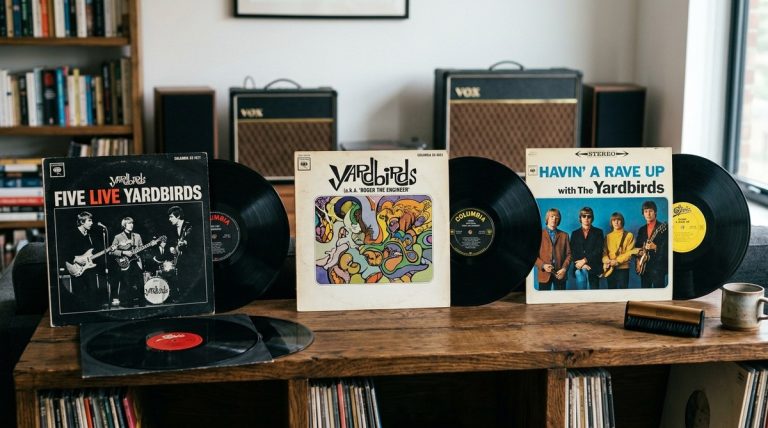
Five Live Yardbirds

It was great to read the interview with Chris Dreja (RC353) but it's a shame that you only asked Chris to look back, and not tell us some more about the current marvelous incarnation of the legendary Yardbirds. Although I've been a fan of the band since the 1960's, I was never able to see the original band playing live. The nearest I got was seeing the New Yardbirds playing at the Mayfair in Newcastle......but that's the start of another story!

I was fortunate enough to see the latest incarnation of the Yardbirds at the Sage in Gateshead on their recent tour with the Zombies, and they were astonishingly good. Not only did the current line-up storm through all the old favourites with terrific energy and vitality, they also played a brace of newer songs which certainly stood up to their classic numbers, such as Crying Out For Love, Mystery of Being, Mr. Saboteur and Dream Within A Dream.

The current bands looks great too - bass player John Idan remarkably manages to look like Jeff Beck and sound like Keith Relf; young Ben King handles lead guitar duties with great aplomb and harp player Billy Boy Misskimmin rounds out the sound to great effect. Add Chris Dreja's driving rhythm guitar and Jim McCarty's assured drumming - a stunning live band! So next time, ask Chris to bring the story up to date - the current band is a great credit to the famous name.
Nick Lambert - Record Collector Magazine (Oct 22, 2008)
A review of Yardbirds vocalist John Idan's new solo album:

The Folly- (Garden Of Idan)
As well as serving the present-day Yardbirds as singing bass player, Idan, a natural-born heart-throb, is the outfit's principal source of sex appeal. Commensurate with this, it's feasible that this first solo album, if exhaling from a late-night music-centre, might facilitate the winning of maidenly favours by smitten young executives in penthouses the world over.

It's almost the music at any given moment that matters more than individual items. Yet every one of them would stand tall if reduced to the acid test of just voice and piano or guitar. Indeed, if some soppy boy-band or singing Britain's Got Talent finalist was looking for material far above and beyond the usual drivel, they might find it in, say, 'That's You And Me', 'I Began To Realise' or 'No Other' - though the raunchier and more lyrically erudite 'The Kali Yoga's Gettin' Hot' occupies an area between these and compositions that are too autobiographical and peculiar to Idan alone for any attempted syndication.

Finally, John parades his exceptional talents both vocally and in an instinctive command of virtually every instrument heard on a confident and extensive breadth of artistic expression that doesn't need association with a famous group to enhance its intrinsic worth.
Alan Clayson
Alan Clayson - (Aug 3, 2008)
Yardbirds drummer Jim McCarty tells us about life as a music legend... and why he's fitter than David Beckham.

JIM McCarty sounds relaxed and happy when he answers the phone for our interview.

Which isn't surprising really when you consider he's been hanging out at home, a French village in Provence, basking in the 35 degree sunshine, while over in Blighty it's a typically grey cloudy day.

“The lifestyle over here suits me," he says.

“I like the sunshine and it's very inspiring. I still write music and I've got a little set-up here. It's a nice place to write.”

Jim will join the rest of the Yardbirds to headline the International stage at the Great British R&B Festival in Colne on Saturday, August 23 and he's looking forward to it.

“It'll be great actually," he says. "I always like coming back to the UK. We've done the festival before but that was a long time ago now so it'll be nice to come back.”

The Yardbirds had a string of innovative hits in the ’60s, including Shapes Of Things, Heart Full of Soul and For Your Love. And, of course, they are credited with pioneering almost every guitar innovation of the ’60s: fuzztone, feedback, distortion, backwards echo. They were one of the first bands to put emphasis on complex lead guitar parts and launched the careers of three of rock's most famous guitarists: Eric Clapton, Jeff Beck and Jimmy Page.

“That's the thing people remember us for,” says Jim. “We're like an academy for young guitarists.

“The thing about The Yardbirds is that it was great background for all these guitarists. We were playing the sort of music that guitar players love and thrive on. The rest of us played a very basic role in that.”

But Jim admits he's proud of the fact that almost all modern guitar bands attribute their success to The Yardbirds' influence.

“That's really great actually,” he says.

“We did an album a few years back called Birdland 2003 and we had all these great guitar players guesting on it. We had Slash, Jeff Beck came back for a track, Jeff Baxter, Steve Vai, all these great guitarists who had played Yardbirds covers when they were starting out.”

What Jim is most proud of, though, is when the band were inducted into the Rock ’n’ Roll Hall of Fame in 1991.

“It was great. Really gratifying.

“Over the years we did some great gigs. We played with The Beatles a few times and the Rolling Stones. We had some crazy times. When we started out it was all really mad. We were part of the British Invasion going over to America with our long hair. They didn't quite understand us at first. We had lots of laughs.”

But he's not ready for hanging up his drumsticks just yet.

“Funnily enough, I just read an article about a study they'd done on drummers," he says.

“This team from Gloucester University had done tests on the drummer from Blondie and they'd found out that drummers were actually fitter than professional footballers because of the level of work and exercise they do in their act.”

So is he trying to tell us he's fitter than David Beckham?

“I guess I am,” he laughs.

* See The Yardbirds at The Great British R&B Festival, Colne, headlining the International Stage on Saturday, August 23. For tickets to the festival, running over the August Bank Holiday weekend (22 to 25) call ticket hotline on 01282 661234 or visit www.bluesfestival.co.uk
Next Page >>